Snapshots
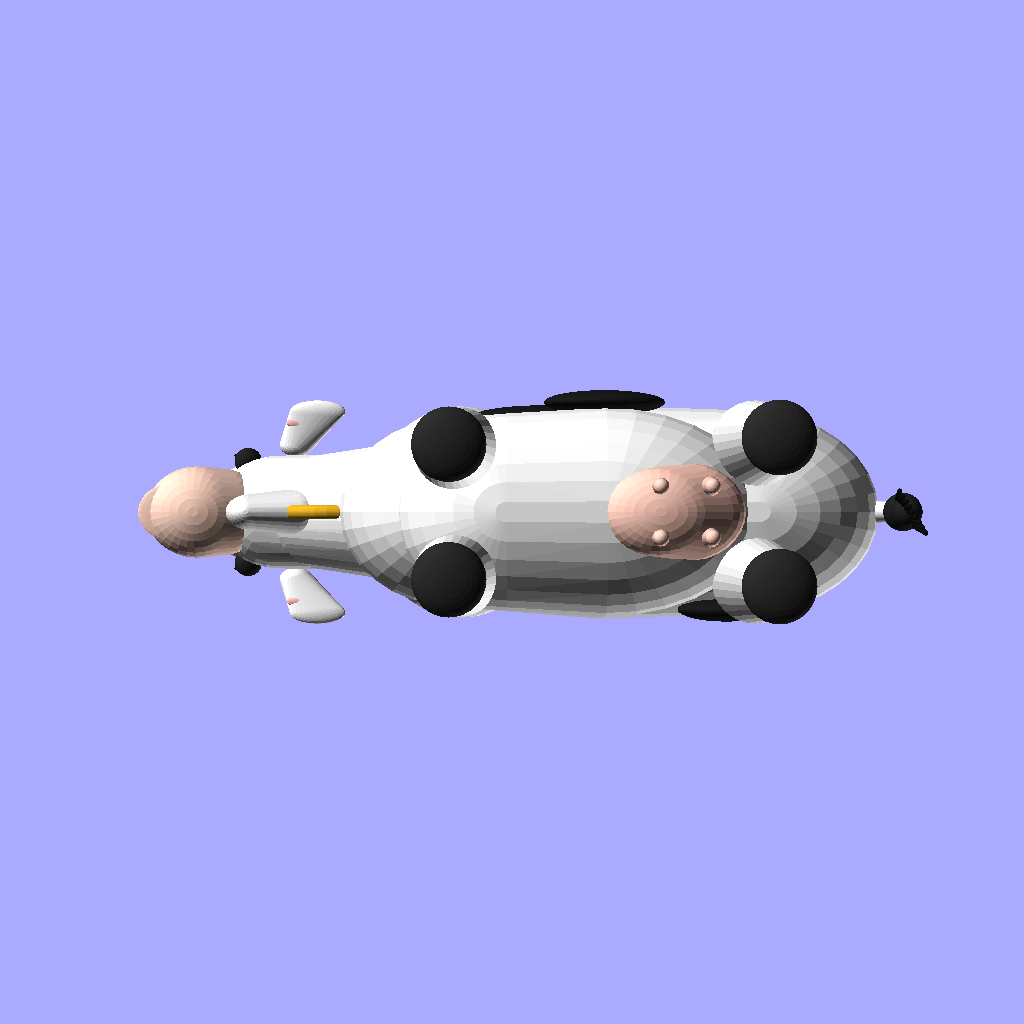
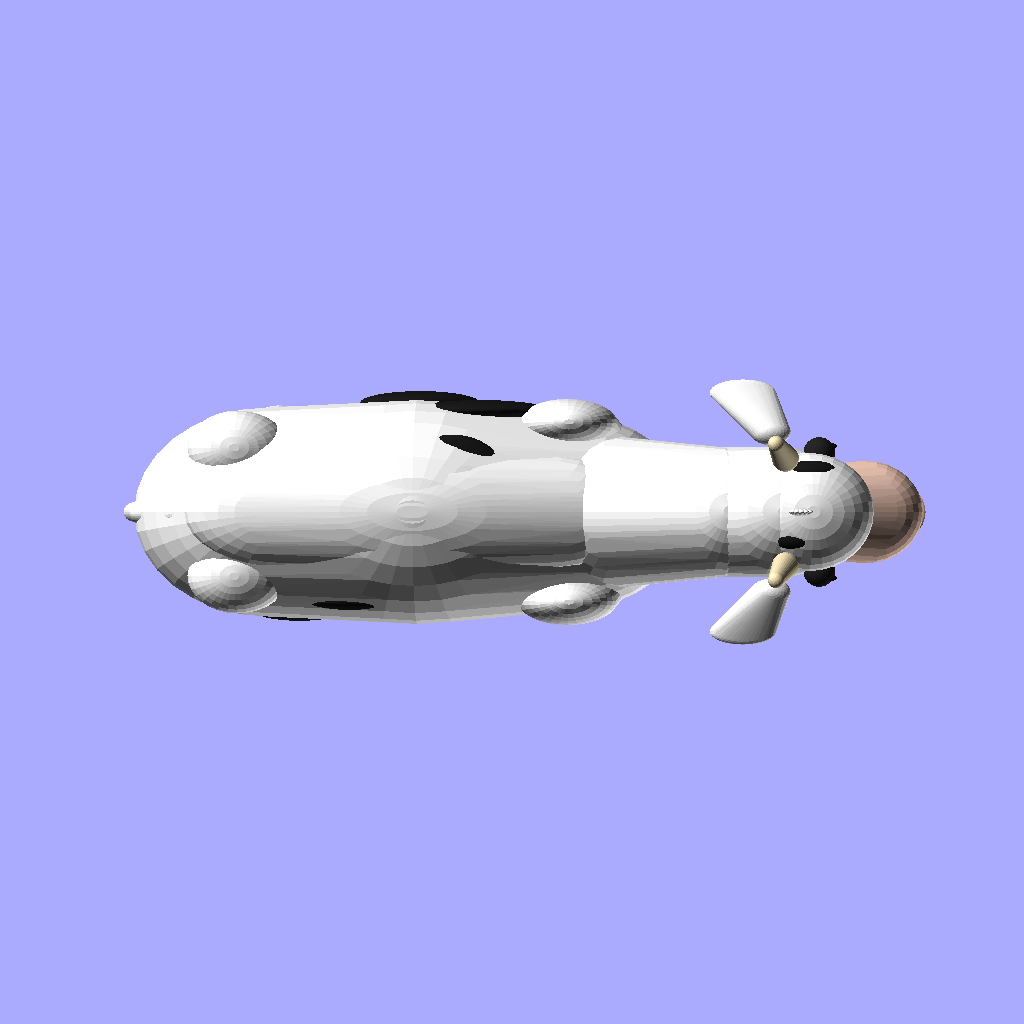
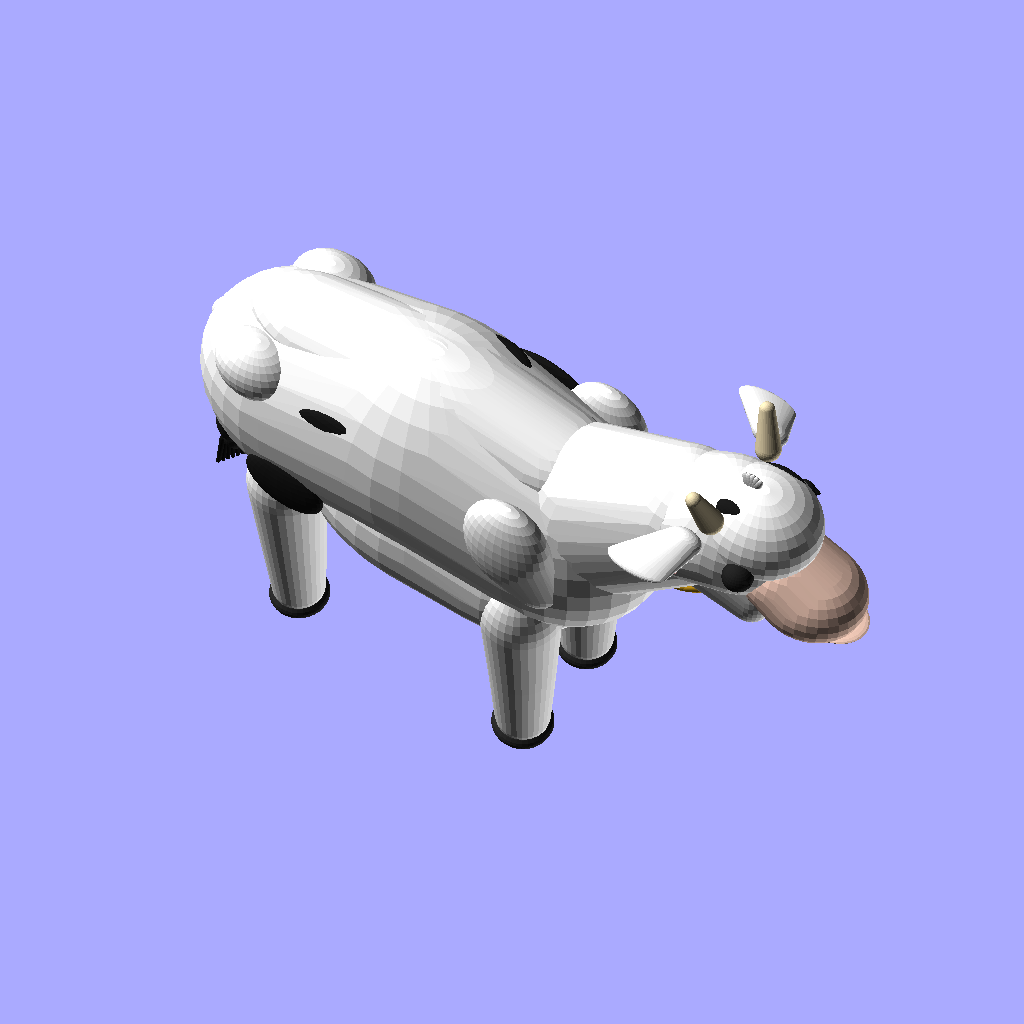
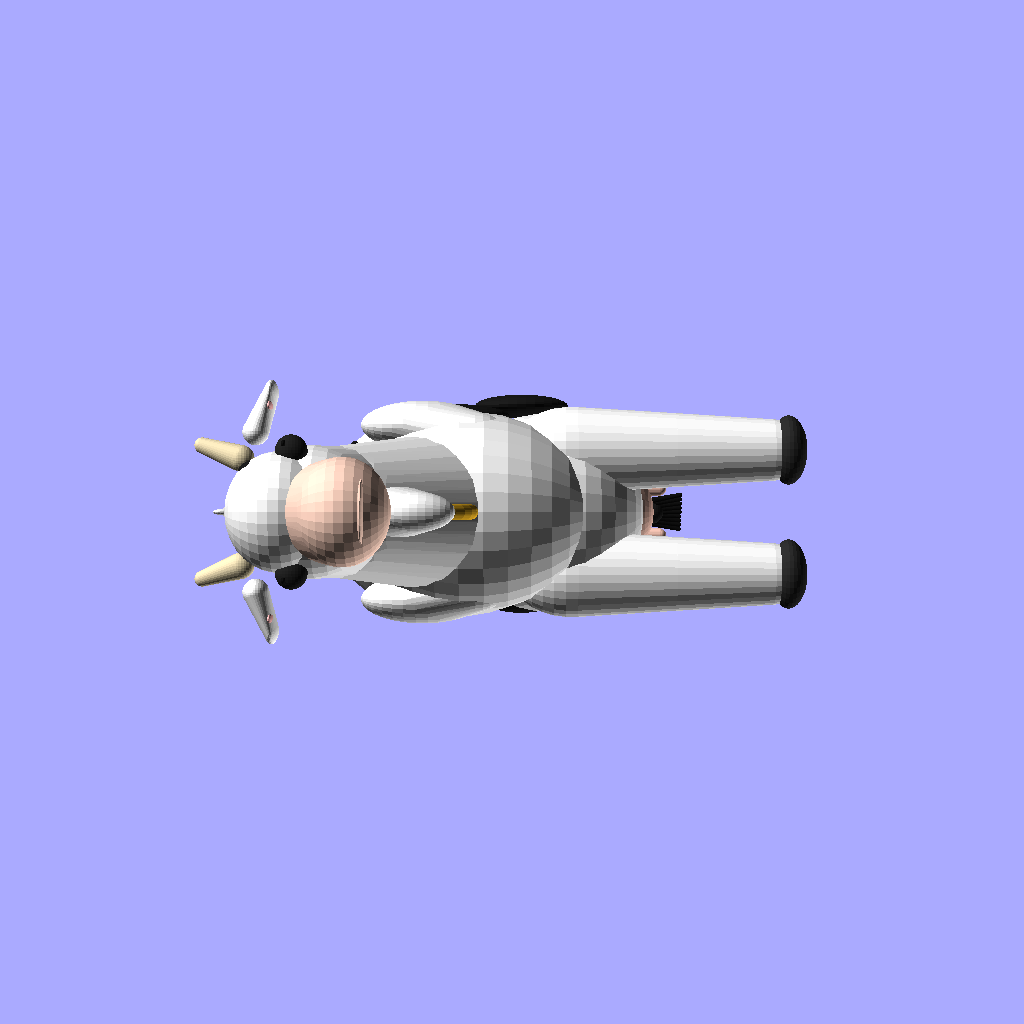
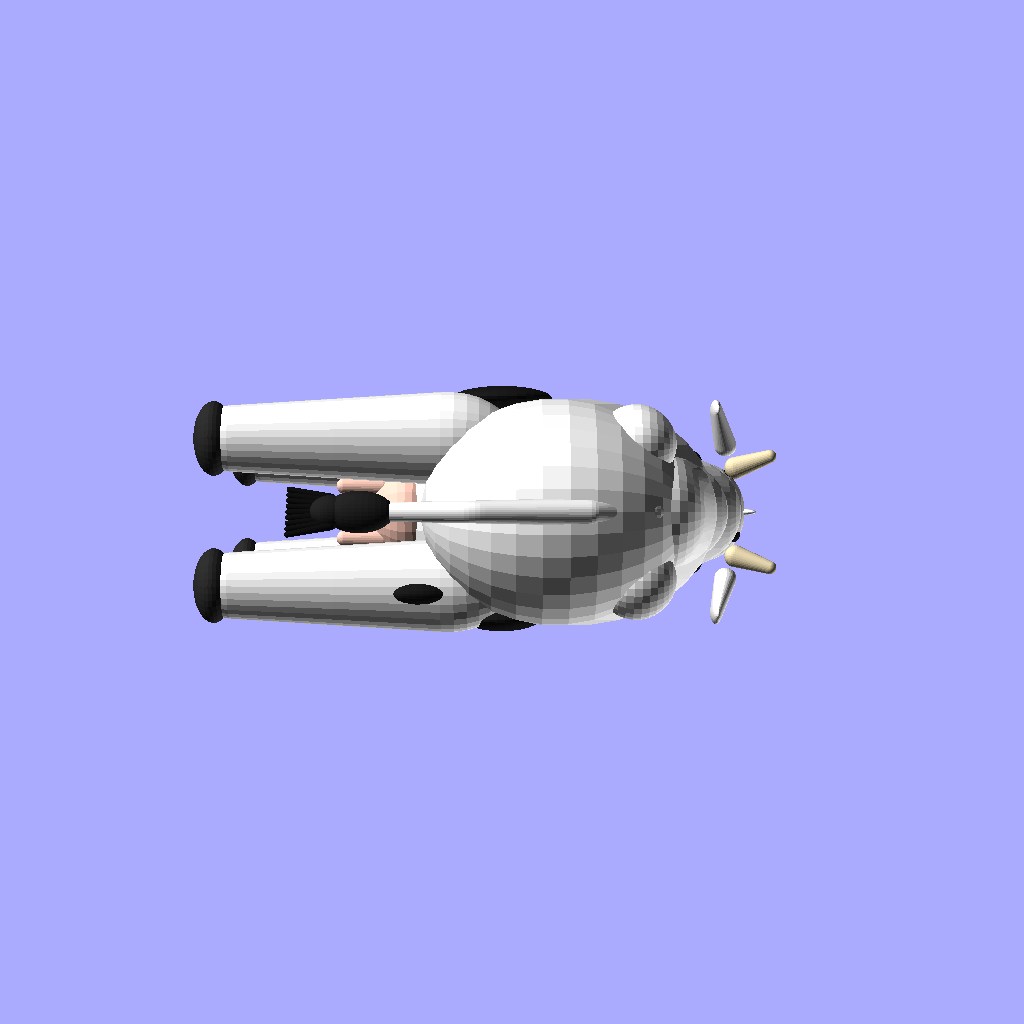
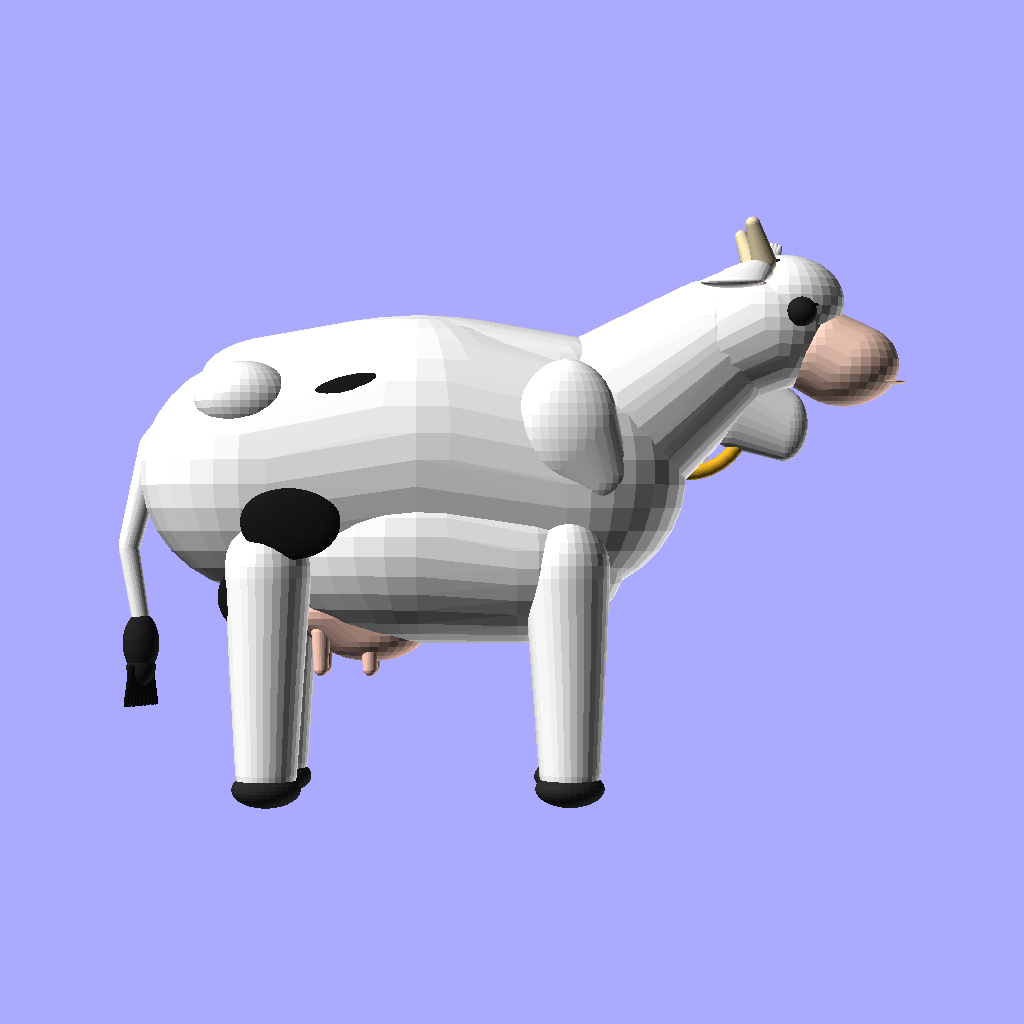
Round-1 review 3/10
match: low
Strengths: Recognizable as a quadruped bovine with black-and-white Holstein-like coloring; Includes key cow features: udder with teats, tail, hooves, and a collar/bell; Head has a distinct pink muzzle/snout area and visible eyes; Six views demonstrate reasonable multi-angle coverage of the model
Issues: Body is an overly long, flat-ended cylinder resembling a sausage or tube, not a natural cow torso; Legs are extremely thin, straight, and peg-like, looking more like dowels than muscular bovine legs; Head is far too small and elongated; the pink muzzle looks like a separate blob attached to the snout; Strange hemispherical bumps protrude from the back/spine area (top view), not anatomically correct; Ears appear as tiny stubs or flat fins rather than proper floppy cow ears; Horns in the front view are short nubs that look arbitrary; Low-poly faceting is very visible everywhere; surface is not smooth; Black spots are placed randomly and look like painted decals rather than organic patches; Tail is a rigid bent tube, not a flexible cow tail with a tuft; Overall far from 'highly detailed and realistic' — reads as a crude cartoon prop
Refinement advice: Rebuild the dairy cow with anatomically correct proportions: a deep, barrel-shaped torso (wider and shorter, not a long cylinder) with a subtle belly and a pronounced hip/shoulder structure; replace the tube body with a scaled/lofted hull. Add four thicker, tapered cylindrical legs with visible knee joints and wide, flat black hooves — legs should be roughly proportional to body height. Reshape the head into a proper wedge-shaped bovine skull with a broad forehead, elongated muzzle that blends smoothly into the face (not a separate sphere), large floppy sideways ears, and small curved horns. Add eyes, nostrils, and a mouth line as small black ellipsoids/cylinders. Model a hanging udder beneath the rear belly with four distinct teats. Give the tail proper segmentation ending in a tuft. Add organic, irregular black patches (use random Voronoi-like shapes) on a white body. Increase geometry resolution (high $fn, smooth curves via hull/scale) and round all sharp edges to remove the faceted look. Place the model standing on a small ground plane.